STYLE GUIDES · BODY SHAPE
Dresses for
your body type.
Which dress cut suits which proportions, and why — every style drawn on the same figure so only the dress changes.
Updated · By the Delve to Life editors · Editorial standards
THE QUICK ANSWER
Choose by where the dress is seamed. Above the hip (A-line, empire, fit-and-flare) lets the skirt fall away from the widest point. At the natural waist (wrap, sheath, corset) follows a defined waist. No seam at all (shift, kaftan) skims straight down.

Body-shape names are a shorthand for proportion, not a rule about what anyone is allowed to wear. Everything below describes what a cut does to the line of an outfit, so you can choose the effect you want rather than follow a prescription.
Start from the dress you like
Most people come to this question with a dress already in mind. Pick it below to see which proportions it suits most easily and why; the five shapes follow after.
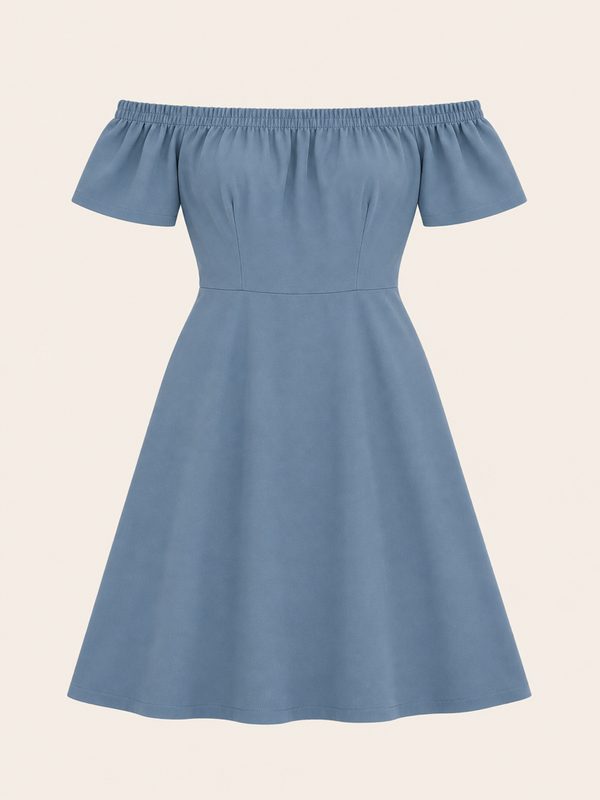 Off-the-shoulder dressEasiest on pear shapes, and on rectangles with a waist seam.
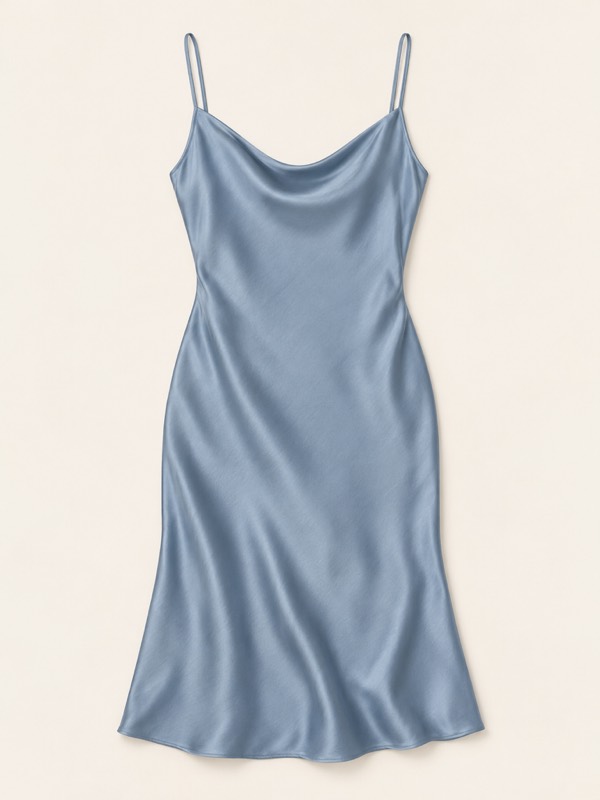 Slip dressSkims with no waist seam; heavier satin falls more than it clings.
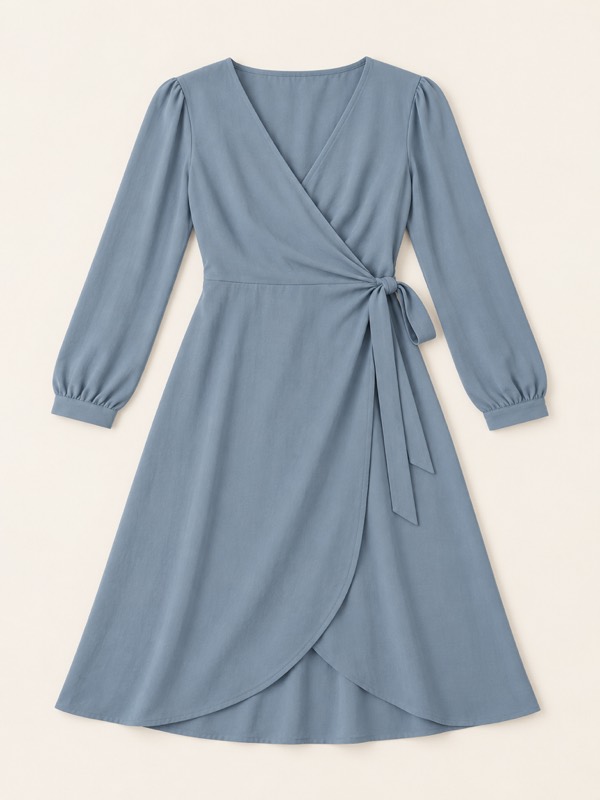 Wrap dressClose to everyone: the tie sets the waist where you want it.
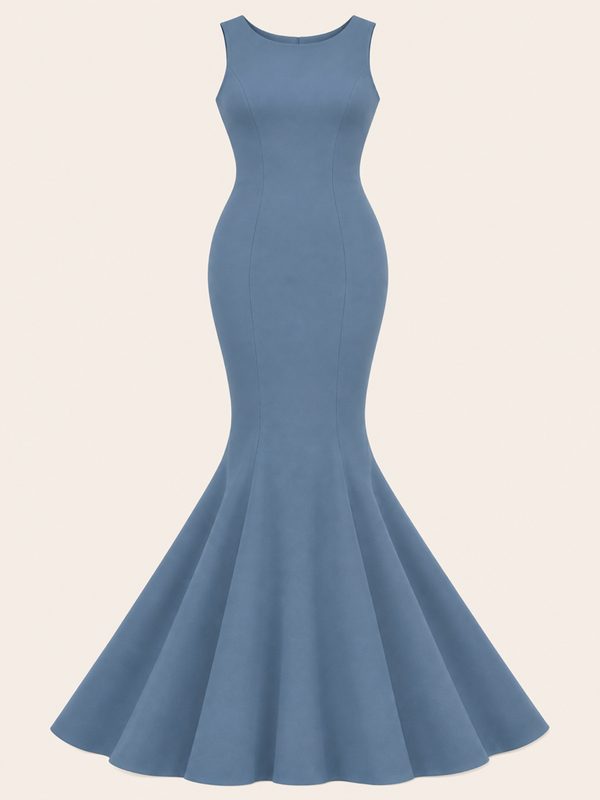 Mermaid dressHourglass first; pear when it fits the hip.
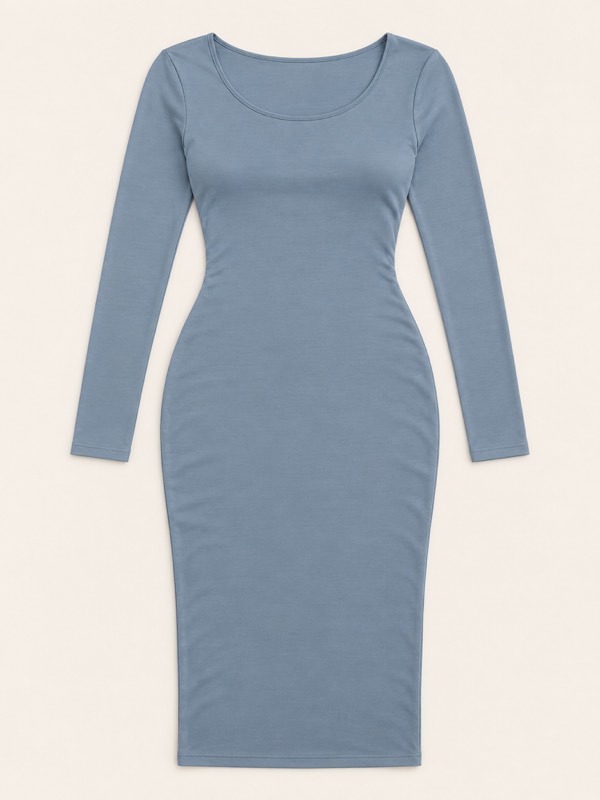 Bodycon dressShows your proportions as they are; follows a defined waist.
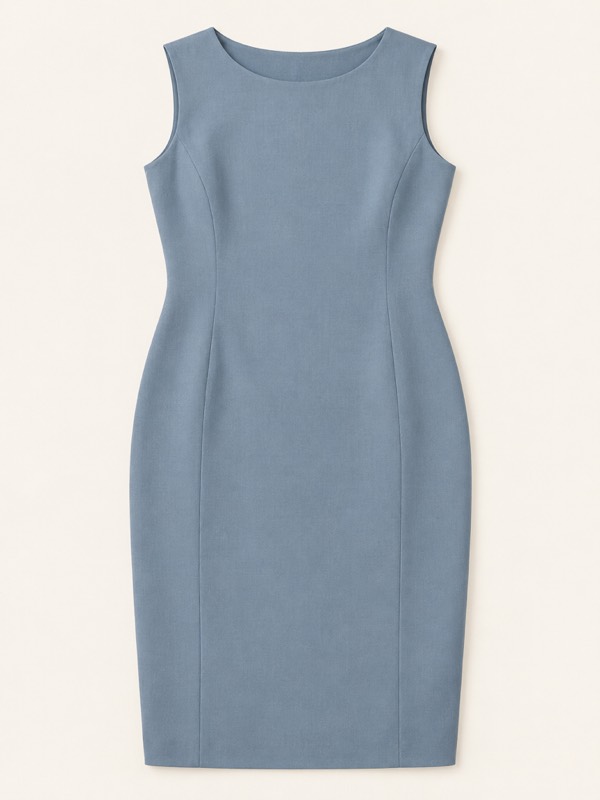 Sheath dressHourglass; rectangle with a belt.
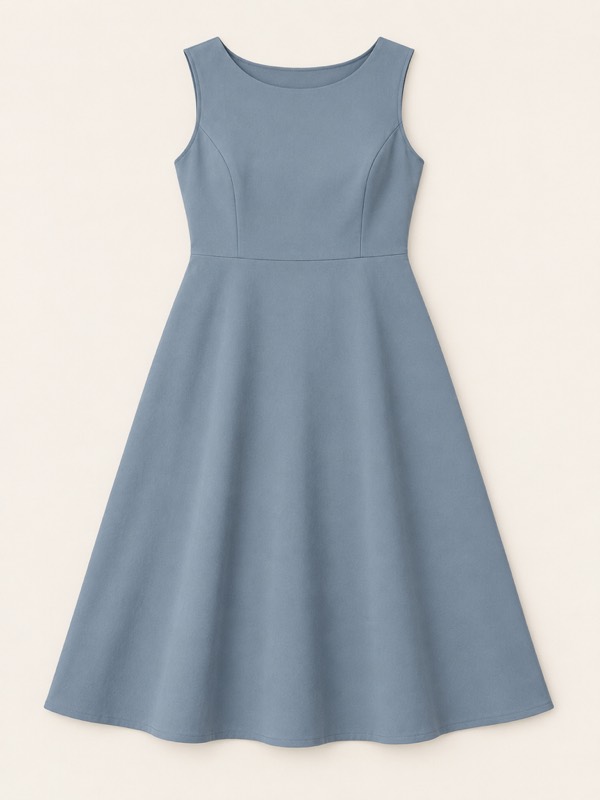 A-line dressPear and inverted triangle; easy on most shapes.
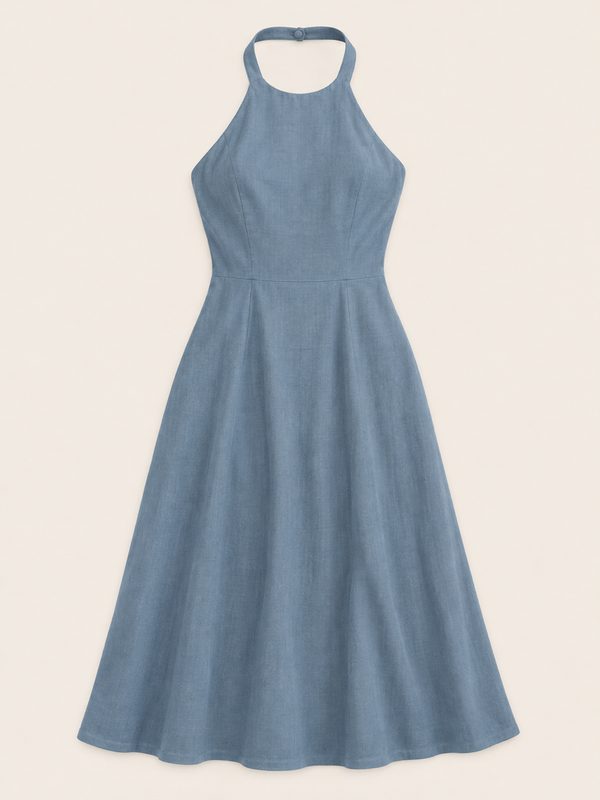 Halter dressRectangle and hourglass; wide straps for a larger bust.
First, take your measurements
Body shape is about how your measurements relate to each other, not how big they are, so two people several sizes apart can share a shape. Bust, waist and hips are enough; shoulders help if you are between rectangle and inverted triangle. Take them over your underwear, with the tape level and snug.
| Shoulders (optional) | Around the widest part of the shoulders and upper arms, arms relaxed at your sides. It helps tell an inverted triangle from a rectangle. |
|---|---|
| Bust | Around the fullest part, tape level and snug, arms down. |
| Waist | The narrowest part of the torso, usually just above the belly button. |
| Hips | Around the fullest part of the hips and seat, feet together. |
Then compare: hips clearly larger than bust is a pear; bust and hips close with a much smaller waist is an hourglass; waist the largest is an apple; all three close together is a rectangle; bust or shoulders clearly larger than hips is an inverted triangle. Most people sit between two of these, which is fine — read both.
No tape measure? Wrap a piece of string or a phone charger cable round yourself, mark it with a pen and lay it along a ruler. Or skip the numbers and take the quiz, which works from a mirror and the clothes you already own.
Work it out with the body shape calculator → No tape? Take the quiz →
Dresses for a pear shape
Your hips measure noticeably more than your bust, and your waist is defined. A hem as wide as the hip keeps one unbroken line, so nothing has to stretch across the widest point.
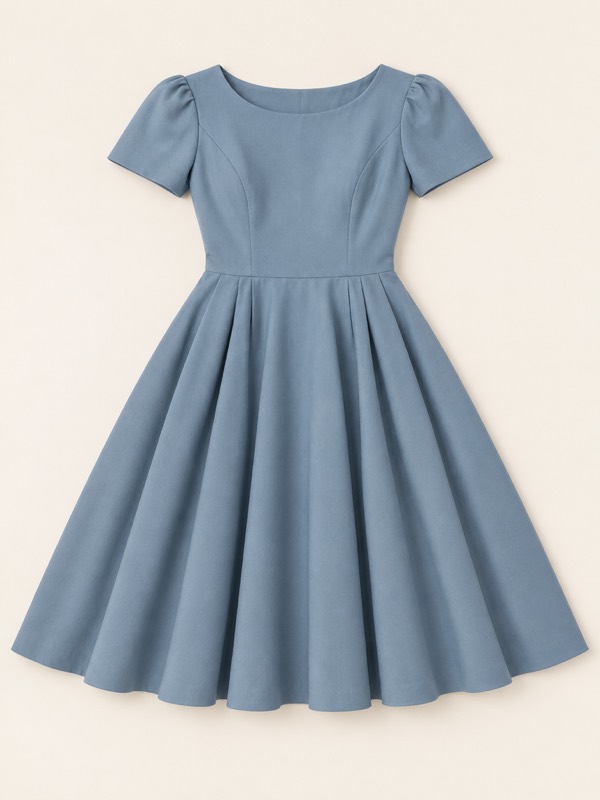
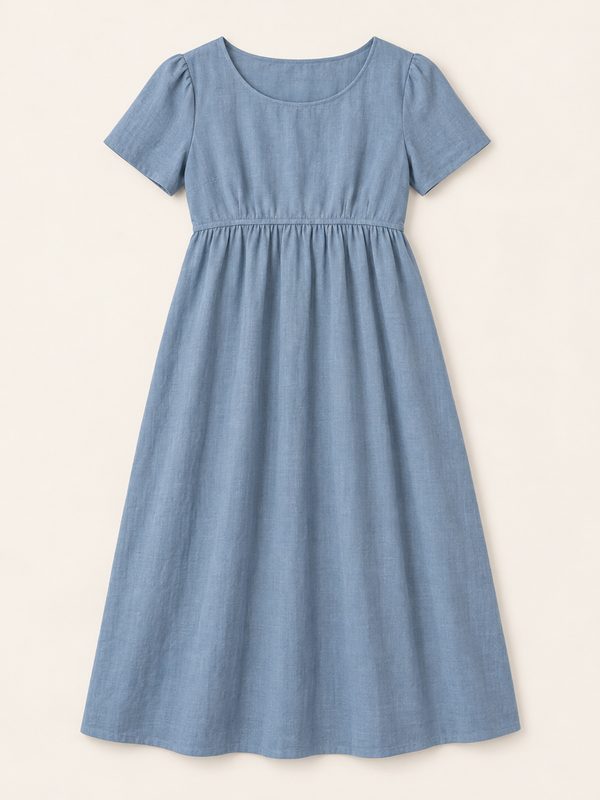
Each of these releases above the hip, so the skirt falls past it rather than over it.
Skirts, pants and necklines for a pear shape →
Dresses for an hourglass shape
Your bust and hips measure within about 5% of each other and your waist is at least a quarter smaller. A seam or tie at the natural waist follows a line the body already makes, so the cut does the least work.
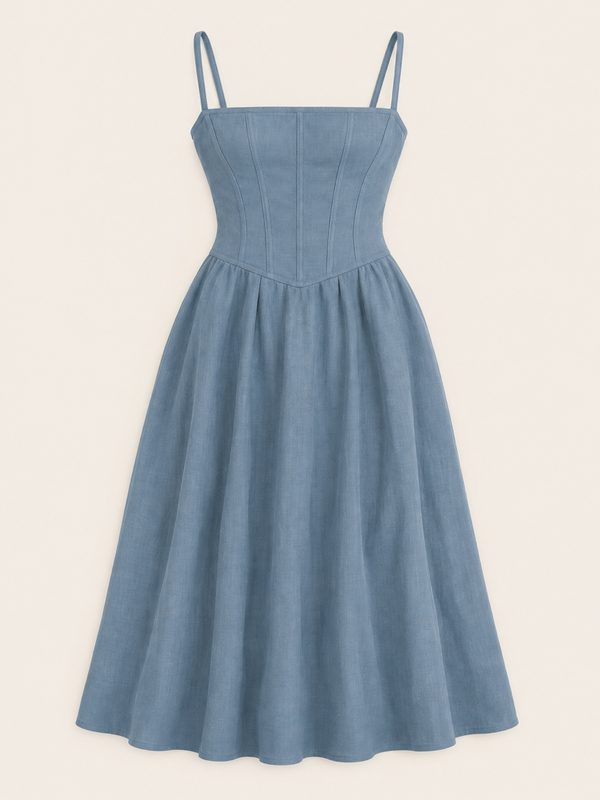
All four are seamed or tied at the natural waist, tracing the shape rather than adding one.
Skirts, pants and necklines for an hourglass shape →
Dresses for an apple shape
Your waist measures the same as or more than your bust and hips, and your legs are often slim. A seam high up, or no seam at all, means nothing sits on the middle - and a shorter hem shows the legs.
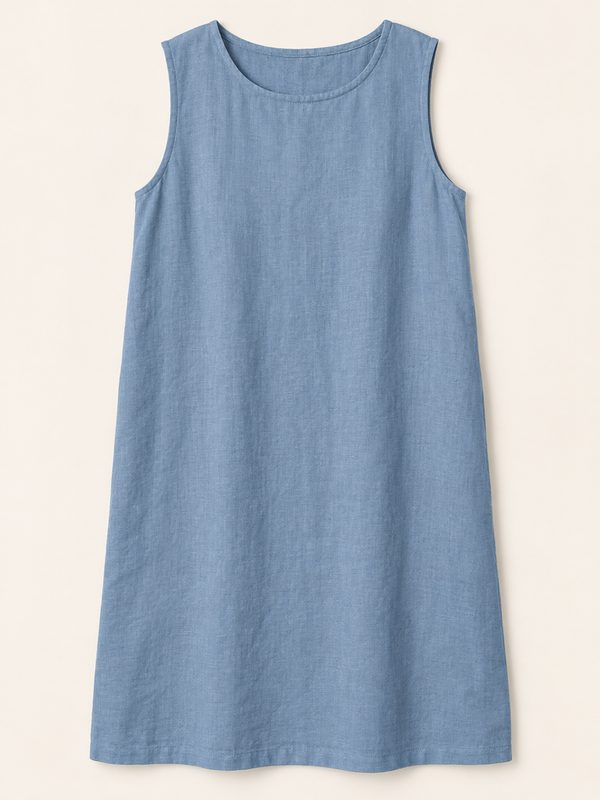
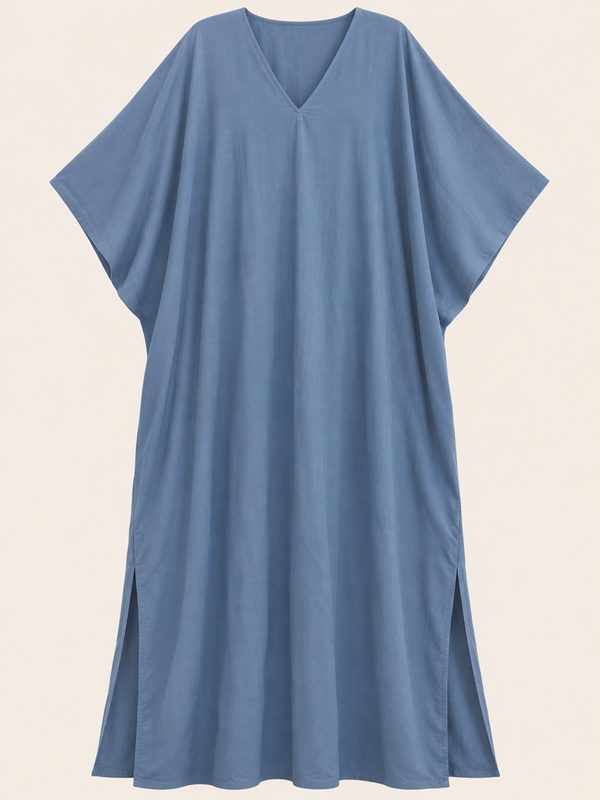
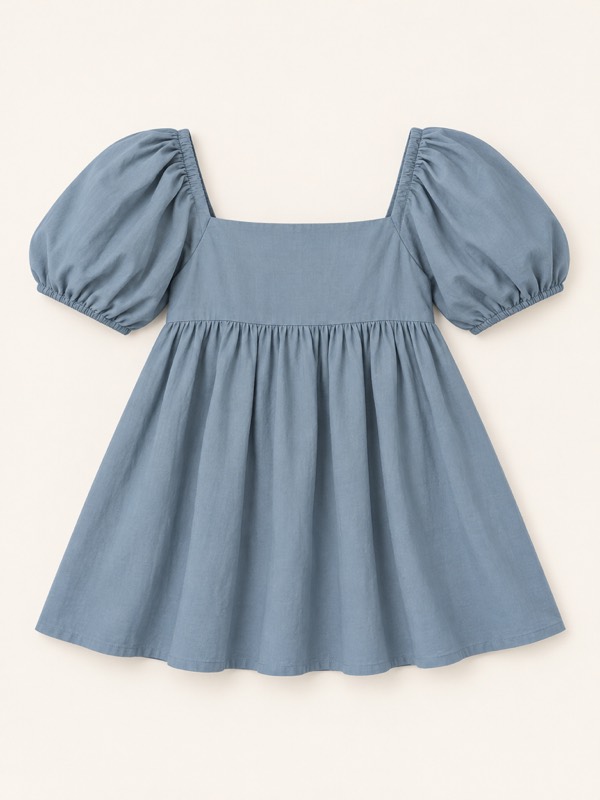
A high seam or none at all means the dress skims rather than sits on the waist.
Skirts, pants and necklines for an apple shape →
Dresses for a rectangle shape
Your bust, waist and hips measure within about 5% of each other, with little waist definition. A garment with its own built-in shape supplies the curve, so the cut does the work rather than the body.
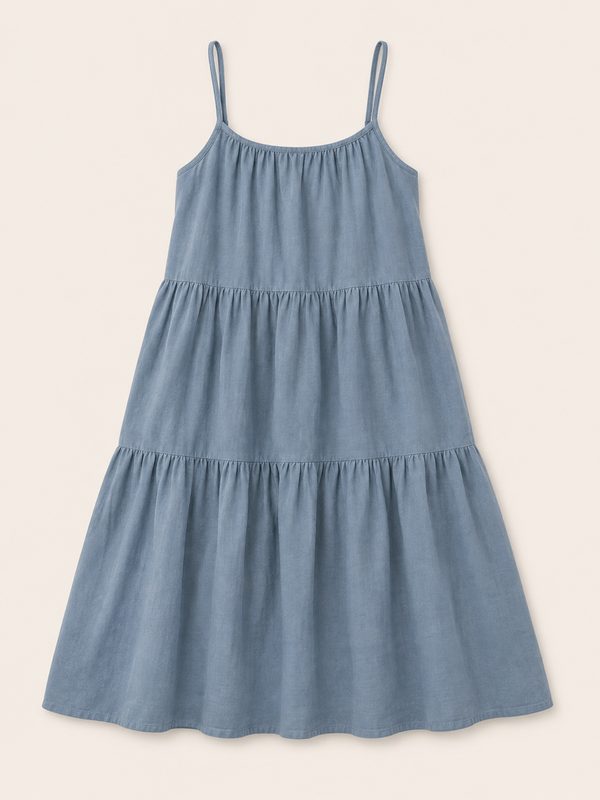
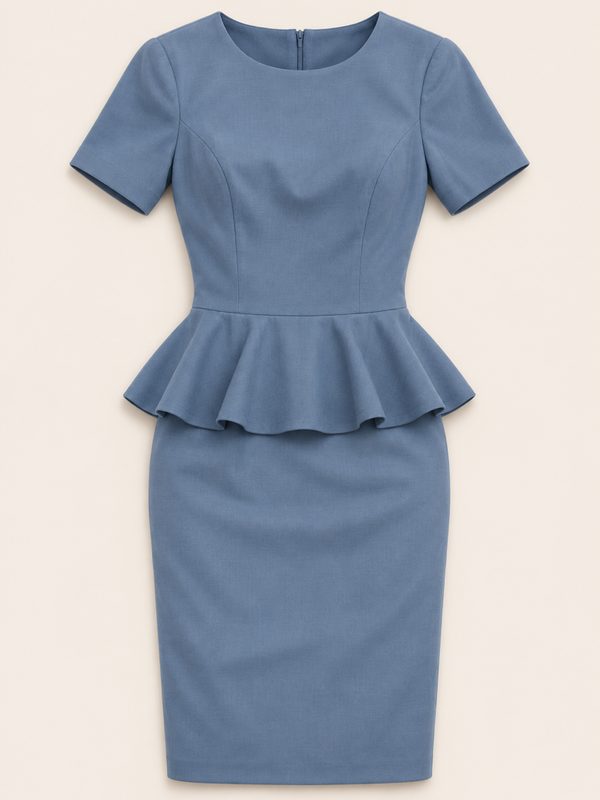
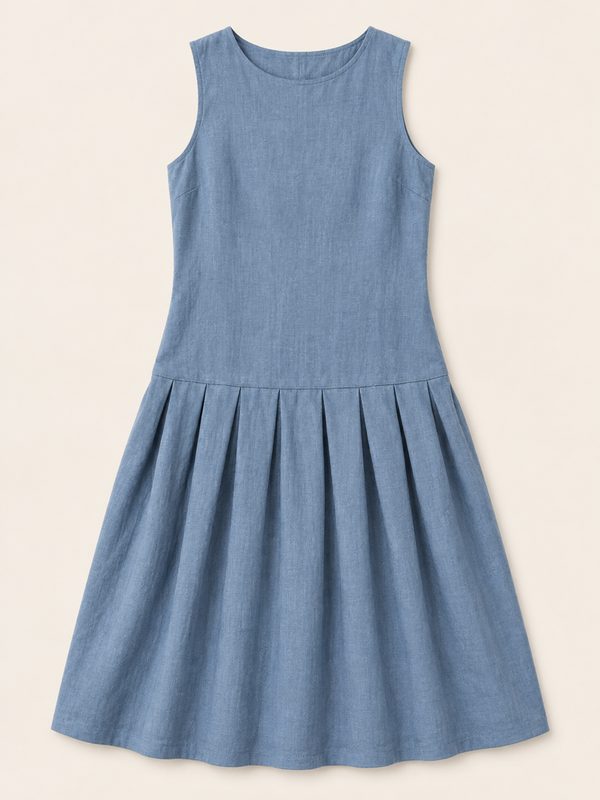
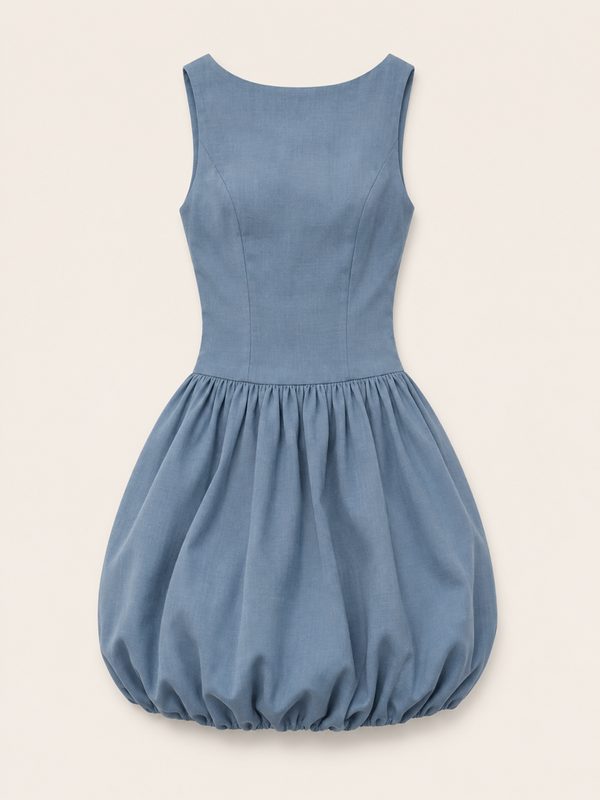
Each has shape built into the garment, which creates a waist by contrast.
Skirts, pants and necklines for a rectangle shape →
Dresses for an inverted triangle shape
Your bust or shoulders measure noticeably more than your hips. Volume low down answers width at the shoulder, so the outfit reads as even top to bottom.
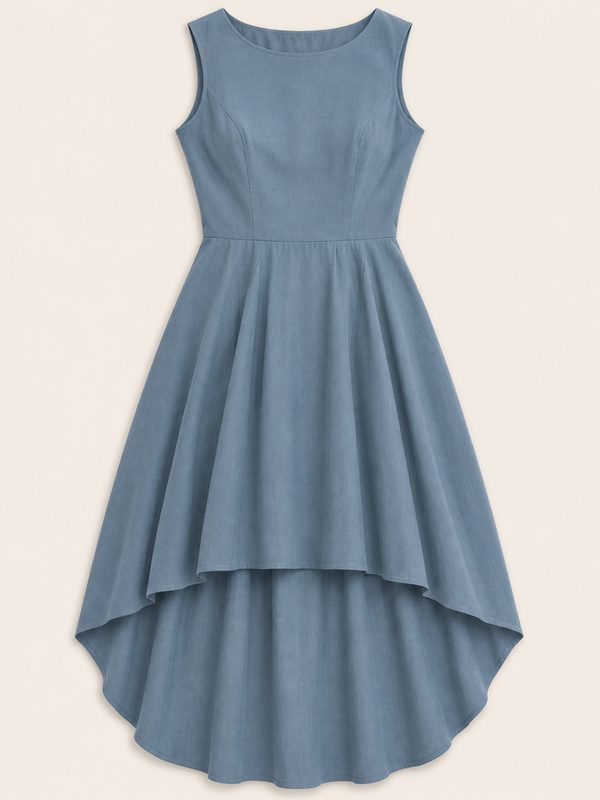
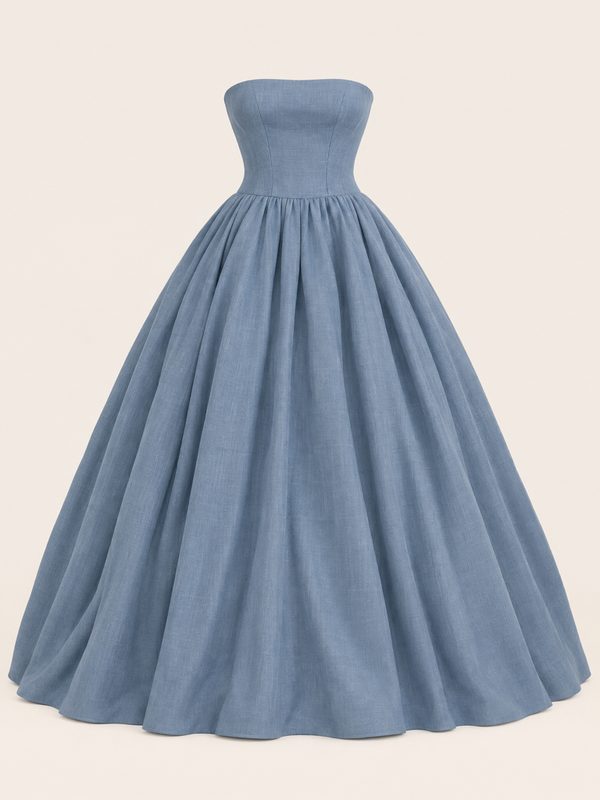
Volume in the skirt answers a broader shoulder, so the silhouette reads as even.
Skirts, pants and necklines for an inverted triangle shape →
Dress length and body shape
Maxi and midi are the two dresses people ask about most, but they are lengths, not cuts. The cut decides most of the effect; the length decides where the line breaks. A hem draws a horizontal line wherever it ends, and it reads longest at a narrow point of the leg: just above or below the knee, or at the ankle.
| Length | Where it ends | Easiest for |
|---|---|---|
| Mini | Mid-thigh | Shows the leg: choose it by how much leg you like to show and how you move. On a pear shape, an A-line mini keeps the hem clear of the hip. |
| Knee | At or just below the knee | The easiest length for every shape, and for petite heights. |
| Midi | Mid-calf | Pear and hourglass in an A-line or wrap. If you are petite, pick one that ends just below the knee rather than at the widest part of the calf. |
| Tea length | Between calf and ankle | A full-skirted, 1950s length that suits pear and hourglass shapes. |
| Maxi | Ankle or floor | Inverted triangle in a full skirt; apple in a straight cut from a high seam; pear when it flares from the waist. |
For the in-between length, see the tea-length dress.
Plus-size dresses for your body shape
Plus size is a size, not a shape. Body shape is about how your measurements compare, so all five shapes exist in every size range, and the same cuts work for the same proportions.
What changes in practice is fabric and construction. Structured fabrics such as ponte, crepe and woven cotton hold the line the cut was designed for; thin stretch jersey tends to follow the body instead. A wrap or a tie lets you place the waist yourself, and a seam placed under the bust (empire) or at the natural waist (fit-and-flare) gives a defined line without a stiff band.
Start from your shape below, then choose the fabric weight you are most comfortable in.
Wedding dresses and wedding-guest dresses by body shape
Wedding dresses use the same silhouettes under bridal names: A-line, ball gown, mermaid and trumpet, sheath or column, and empire. The same logic applies, so the table gives both the gown and an everyday-length choice for a wedding guest. Check the invitation's dress code before the cut.
| Shape | Wedding dress | As a guest |
|---|---|---|
| Pear | A-line, ball gown | A-line or fit-and-flare midi |
| Hourglass | Mermaid, trumpet, fitted sheath | Wrap or sheath |
| Apple | Empire, A-line from a structured bodice | Empire or wrap midi |
| Rectangle | Ball gown, or a belted or embellished waist | Tiered or peplum |
| Inverted triangle | A-line or ball gown with a V-neck | A-line or fit-and-flare with a V-neck |
Dress codes, from cocktail to black tie: what to wear to a wedding.
Questions people ask
How do I know what dress suits my body type?
Measure your bust, waist and hips, and compare them. Hips clearly larger than bust is a pear; bust and hips close with a much smaller waist is an hourglass; waist the largest is an apple; all three close together is a rectangle; bust or shoulders clearly larger than hips is an inverted triangle. Then pick by where the dress is seamed.
What dress style looks good on everyone?
A wrap dress comes closest, because the tie sets the waist wherever you want it rather than where the pattern put it. An A-line is the next most adaptable, since it releases above the hip whatever the hip measures.
What is the most common body shape?
Rectangle and pear are the two most commonly reported in fit studies, but most people sit between two shapes rather than squarely in one. If two descriptions fit you, read both - the advice overlaps more than it conflicts.
Does body shape matter more than size?
For choosing a cut, yes. Shape is about the relationship between three measurements, not how large they are, so two people several sizes apart can suit the same dress style.
What if I don't match any body shape?
That is normal and not a problem to solve. The shapes are five rough buckets for a continuous range of proportions. Pick the cut by the effect you want from the list above, which works regardless of which label fits.
What body type looks best in a maxi dress?
Maxi is a length, not a cut, so the cut matters more. Inverted triangle shapes suit a full-skirted maxi, apple shapes a straight maxi from a high seam, pear shapes a maxi that flares from the waist, and hourglass shapes a wrap maxi.
What dress shape works for plus size bodies?
The one that matches your proportions, exactly as at any other size: plus size is a size, not a shape. Choose structured fabrics such as ponte or crepe, and a wrap or tie if you want to place the waist yourself.
Does dress colour depend on body type?
Not much. Colour is about your colouring, the occasion and what you pair it with; the cut decides the line. A single colour from top to toe reads as one long line, and a bright colour draws the eye to wherever it sits, which you can use either way.
One last thing worth saying plainly: none of this is a rule. These are the predictable effects of a cut, and knowing them makes shopping faster. If a style that isn't listed for your proportions is the one you like, that is reason enough to wear it.
Seen a dress and don't know what it's called? Tap through the pictures and we'll name it and find real ones.
Describe it with pictures