STYLE GUIDES · BODY SHAPE
How to dress for
your body shape.
Your measurements, or a mirror and the clothes you already own, tell you which of five proportions you are closest to. From there, every cut below is illustrated, so you can see the effect before you buy.
Updated · By the Delve to Life editors · Editorial standards
THE QUICK ANSWER
No tape measure? Answer six questions about how your clothes fit. Have one? Measure bust, waist and hips and let the calculator compare them. Then choose by where a garment is seamed: above the widest point, at the waist, or not at all.
Take the no-measure quiz Use the calculator
Body-shape names are a shorthand for proportion, not a rule about what anyone is allowed to wear. Everything below describes what a cut does to the line of an outfit, so you can choose the effect you want rather than follow a prescription.
Body shape quiz: no tape measure needed
This body type quiz asks six questions about your mirror and the clothes you already own, one at a time. Body shape is about proportion, not size, so you don't need any numbers. Have a tape measure? Use the calculator instead.
1. In a mirror, which looks wider: your shoulders or your hips?
Stand straight on and look at the outline only. Close-fitting clothes make it easier; skip any question you are not sure about.
2. From the front, how much does your waist curve in?
Compare the narrowest part of your torso with your bust and hips.
3. Compare your size in tops with your size in skirts or pants.
Use the same shop or brand if you can; sizes vary between brands.
4. How do jeans or trousers usually fit you?
Think of non-stretch or low-stretch pairs.
5. Where do fitted tops, shirts or jackets get tight first?
The place you notice first when a top is a little too small.
6. In a fitted dress, which part is hardest to get right?
A dress with a fitted top and skirt, such as a sheath or bodycon.
How the quiz works out a result, answer by answer: How the quiz decides.
First, take your measurements
Body shape is about how your measurements relate to each other, not how big they are, so two people several sizes apart can share a shape. Bust, waist and hips are enough; shoulders help if you are between rectangle and inverted triangle. Take them over your underwear, with the tape level and snug.
| Shoulders (optional) | Around the widest part of the shoulders and upper arms, arms relaxed at your sides. It helps tell an inverted triangle from a rectangle. |
|---|---|
| Bust | Around the fullest part, tape level and snug, arms down. |
| Waist | The narrowest part of the torso, usually just above the belly button. |
| Hips | Around the fullest part of the hips and seat, feet together. |
Then compare: hips clearly larger than bust is a pear; bust and hips close with a much smaller waist is an hourglass; waist the largest is an apple; all three close together is a rectangle; bust or shoulders clearly larger than hips is an inverted triangle. Most people sit between two of these, which is fine — read both.
No tape measure? Wrap a piece of string or a phone charger cable round yourself, mark it with a pen and lay it along a ruler. Or skip the numbers and take the quiz, which works from a mirror and the clothes you already own.
Body shape calculator
Type your measurements in inches or centimetres. The calculator compares them using the rules listed under it, names the shape you are closest to, and says so when you sit between two.
How the calculator decides
- Apple: Your waist is at least 95% of your bust and at least 95% of your hips. This is checked first.
- Pear: Otherwise, your hips are at least 5% larger than your bust.
- Inverted triangle: Otherwise, your bust is at least 5% larger than your hips.
- Hourglass: Otherwise (bust and hips within 5% of each other), your waist is at least 25% smaller than the smaller of the two.
- Rectangle: Otherwise: bust and hips within 5% of each other, and a waist less than 25% smaller.
Shoulders are a second opinion, not part of the main rule: shoulder and hip measurements differ a lot from person to person even at the same shape. If your shoulders measure more than 10% above your hips, the result adds inverted triangle as a shape to read too.
These cut-offs are a common convention for sorting proportions into five names, not a medical or scientific standard. A result close to a cut-off means you sit between two shapes, and the calculator says so. The measurements you type stay in your browser and aren't sent or saved; we count only which result was shown, without cookies.
How the quiz decides
Each answer adds points to one of three tallies: middle (a fuller middle), balance (plus when your lower half reads wider, minus when your shoulders or top half do) and waist (how much your waist curves in). Questions 1 to 3 carry the weight. Questions 4 to 6 are fit clues, and together they can add at most 1 to balance (either way), 1 to waist and 2 to middle, so one tight spot can't outvote the mirror. The tallies are then read in this order:
- Apple: Middle tally 3 or more. This is checked first.
- Pear: Otherwise, balance tally +2 or more.
- Inverted triangle: Otherwise, balance tally −2 or less.
- Hourglass: Otherwise, waist tally 2 or more.
- Rectangle: Otherwise.
The answers that add points (the rest add nothing):
| Question | Answer | Adds |
|---|---|---|
| 1 | My shoulders look wider | balance −2 |
| 1 | My hips look wider | balance +2 |
| 2 | A lot: it's clearly narrower than both bust and hips | waist +2 |
| 2 | A little | waist +1 |
| 2 | It looks about as wide as my bust and hips, or wider | middle +3 |
| 3 | Tops are two or more sizes smaller | balance +2 |
| 3 | Tops are one size smaller | balance +1 |
| 3 | Tops are one size bigger | balance −1 |
| 3 | Tops are two or more sizes bigger | balance −2 |
| 4 | I go up a size for my hips and thighs, then the waist is loose | balance +1, waist +1 |
| 4 | They fit my hips but gap at the back of the waist | waist +1 |
| 4 | The waist gets tight before the hips do | middle +1 |
| 5 | Across the shoulders and upper back | balance −1 |
| 5 | Around the tummy | middle +1 |
| 6 | The hips: tight there while the top fits | balance +1 |
| 6 | The top: tight at the bust or shoulders while the skirt fits | balance −1 |
| 6 | The middle: tight at the waist or tummy | middle +1 |
| 6 | The waist gaps: it fits bust and hips but is loose between | waist +1 |
A tally one point from a cut-off adds a second shape to read. Not-sure answers add nothing; without an answer to at least one of questions 1 to 3 the quiz asks for more before it names a shape, and with fewer than three real answers the result is marked as a rough guess. The quiz uses visual and clothing-fit clues, which vary with brand and fabric, so its result may differ from the measurement calculator; for a closer answer use the calculator with a tape measure, or a piece of string and a ruler. Your answers stay in this tab and aren't saved; we count quiz progress and result names, without cookies.
The five shapes
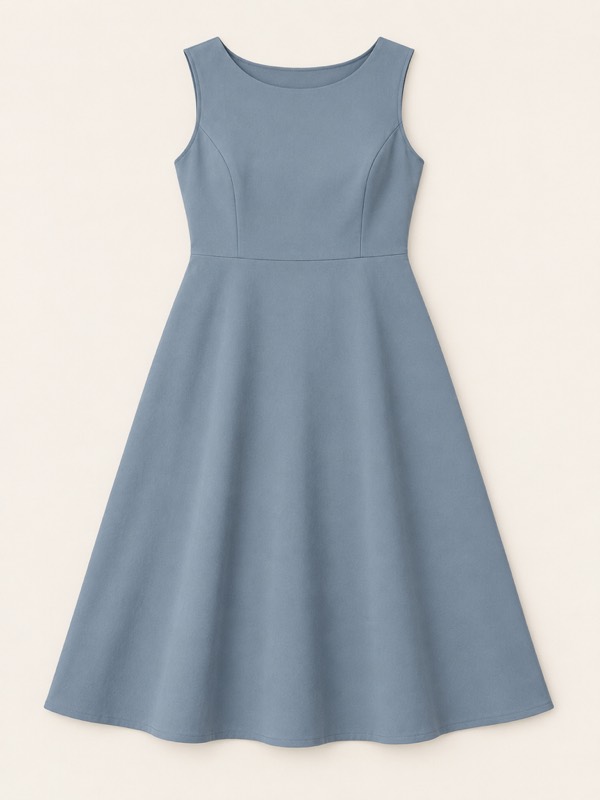 PearYour hips measure noticeably more than your bust, and your waist is defined.Pictured: a-line dress
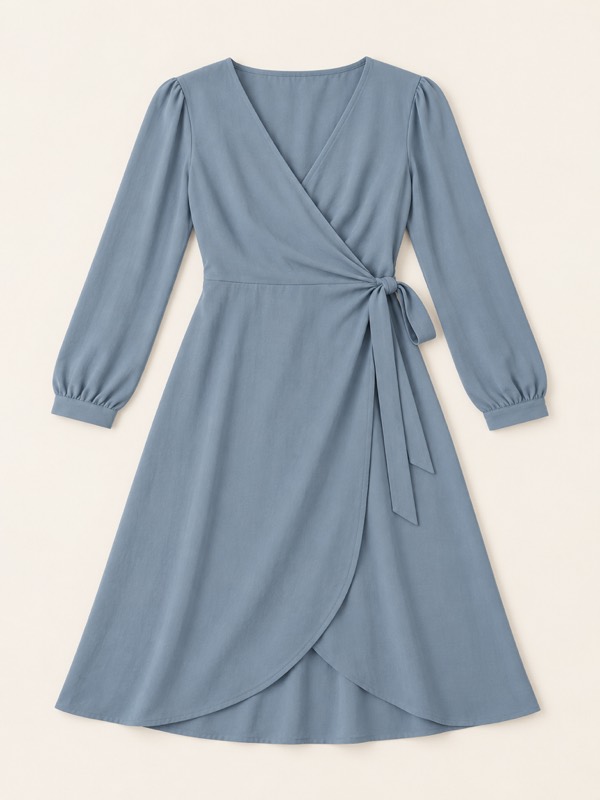 HourglassYour bust and hips measure within about 5% of each other and your waist is at least a quarter smaller.Pictured: wrap dress
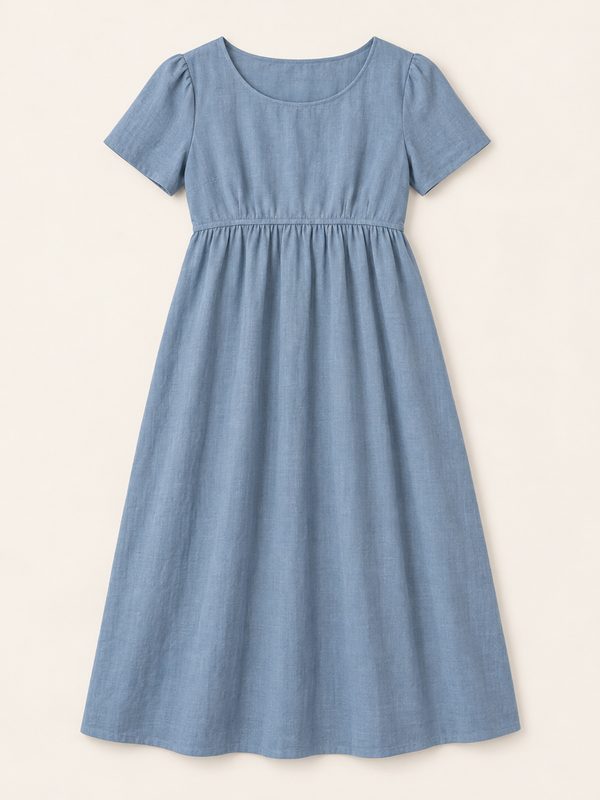 AppleYour waist measures the same as or more than your bust and hips, and your legs are often slim.Pictured: empire waist dress
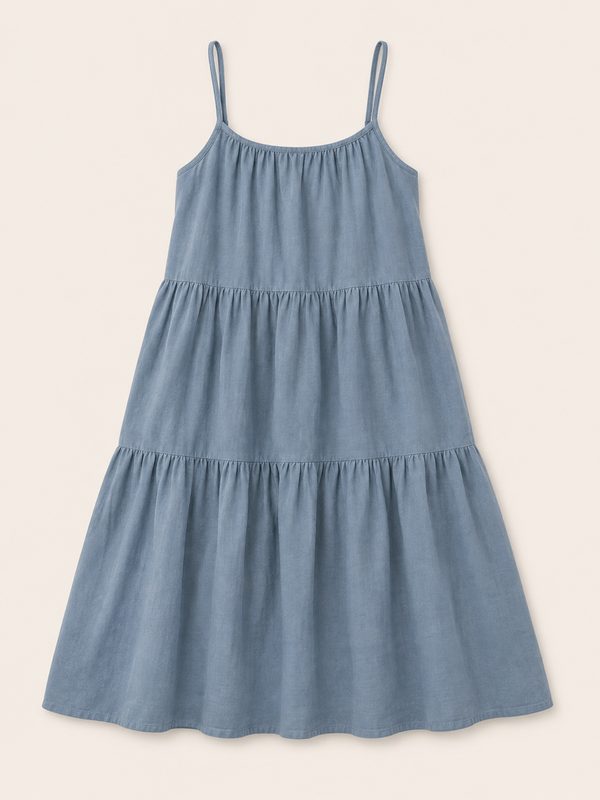 RectangleYour bust, waist and hips measure within about 5% of each other, with little waist definition.Pictured: tiered dressInverted triangleYour bust or shoulders measure noticeably more than your hips.Pictured: a-line dress
Or start from the garment
Every glossary hub has its own body-shape section, so you can start from what you are shopping for instead: dresses, skirts, pants.
Questions people ask
How do I know what dress suits my body type?
Measure your bust, waist and hips, and compare them. Hips clearly larger than bust is a pear; bust and hips close with a much smaller waist is an hourglass; waist the largest is an apple; all three close together is a rectangle; bust or shoulders clearly larger than hips is an inverted triangle. Then pick by where the dress is seamed.
What dress style looks good on everyone?
A wrap dress comes closest, because the tie sets the waist wherever you want it rather than where the pattern put it. An A-line is the next most adaptable, since it releases above the hip whatever the hip measures.
What is the most common body shape?
Rectangle and pear are the two most commonly reported in fit studies, but most people sit between two shapes rather than squarely in one. If two descriptions fit you, read both - the advice overlaps more than it conflicts.
How do I find my body shape from my measurements?
Measure your bust, waist and hips (and your shoulders if you can), then compare them: hips clearly larger than bust is a pear; bust and hips close with a much smaller waist is an hourglass; waist the largest is an apple; all close together is a rectangle; shoulders or bust clearly larger than hips is an inverted triangle. The calculator on this page does the comparison for you.
How can I find my body shape without a tape measure?
Use a mirror and the clothes you already own: check whether your shoulders or hips look wider, how much your waist curves in, how your top and bottom sizes compare, and where fitted clothes get tight first. The quiz on this page suggests a starting point for exploring the shape guides. If you want numbers, a piece of string and a ruler work as a tape measure.
Can I tell my body shape from my clothing size?
Not on its own. A difference between your top and bottom sizes is a clue: tops two or more sizes smaller than your skirts or pants points towards a pear shape, and two or more sizes bigger towards an inverted triangle. But cup size, cut, fabric and brand sizing also affect fit, even within one brand, so use size differences alongside how your bust, waist and hips compare.
One last thing worth saying plainly: none of this is a rule. These are the predictable effects of a cut, and knowing them makes shopping faster. If a style that isn't listed for your proportions is the one you like, that is reason enough to wear it.