STYLE LESSON 03 · INSPIRATION
Borrow an idea.
Make the outfit yours.
A character can spark an outfit without becoming a costume. Translate the detail you love into clothes that suit your actual day.
Screen wardrobes help tell stories. Their settings, budgets and continuity requirements may be very different from yours. Instead of trying to reproduce every item, ask what caught your eye: a colour pairing, a sharp layer, a soft dress or one recognisable accessory.
Blair: choose one focal accessory
Vogue connects padded headbands with Blair Waldorf’s style. Treat the headband as a starting point for your own styling experiment. You do not need a replica, a specific brand or the rest of a television wardrobe.
For a relaxed study day, try a headband with a plain knit, comfortable trousers and shoes suitable for walking. Keep the other details quiet if you want the accessory to draw attention. If headbands feel uncomfortable or do not suit your hair, use a scarf, a hair clip or a brooch instead. The transferable idea is a single chosen focal point.
For an occasion with a more formal dress code, the same idea might become a simple dress with one expressive accessory. Check the event’s requirements and your comfort first. This is an editorial interpretation, not an identification of an outfit worn on screen.
Rachel: adapt the dress to your climate
Who What Wear places Rachel Green in a discussion of 1990s style and slip dresses. Use a simple dress as an anchor and build around the weather, coverage and activities you expect.
For a warm evening, a lightweight dress with an optional breathable shirt can offer adjustable coverage. For a cooler day, try a comfortable base layer under the dress and an outer layer that fits over both. Test the fabrics together: cling, bunching and restricted movement are useful reasons to change a combination. Choose footwear around the ground and walking distance.
You can explore the same layering idea with a skirt and top if a slip dress is not something you enjoy. The aim is to notice a useful relationship between pieces, rather than acquire the character’s wardrobe.
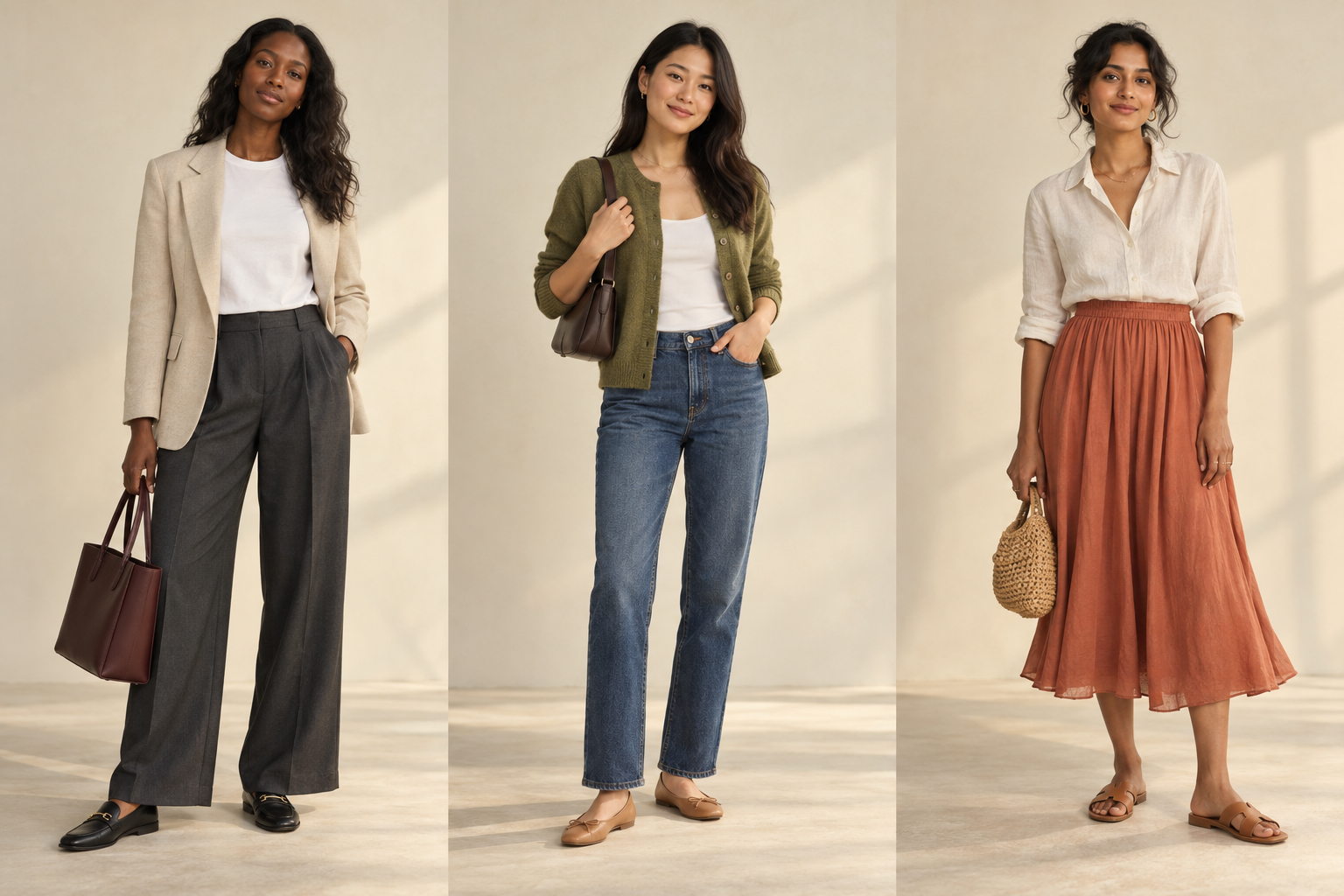
A reference-to-reality exercise
- Name exactly one detail you like. “A dark accessory against a light top” is more useful than “her whole style.”
- Write down your day: setting, weather, walking, coverage and dress code.
- Choose pieces you own that express the detail. Change the material, length or footwear as your day requires.
- Try the outfit in motion. Keep what feels good and leave the rest of the reference behind.
A character’s country or a celebrity’s background does not tell you what everyone nearby wants to wear. Use references as invitations, and give your own preferences the final say. These examples are independently written; no celebrity or rights holder endorses this site.
Refine your version with the lessons on proportion and colour, or bring your occasion to the outfit studio.